


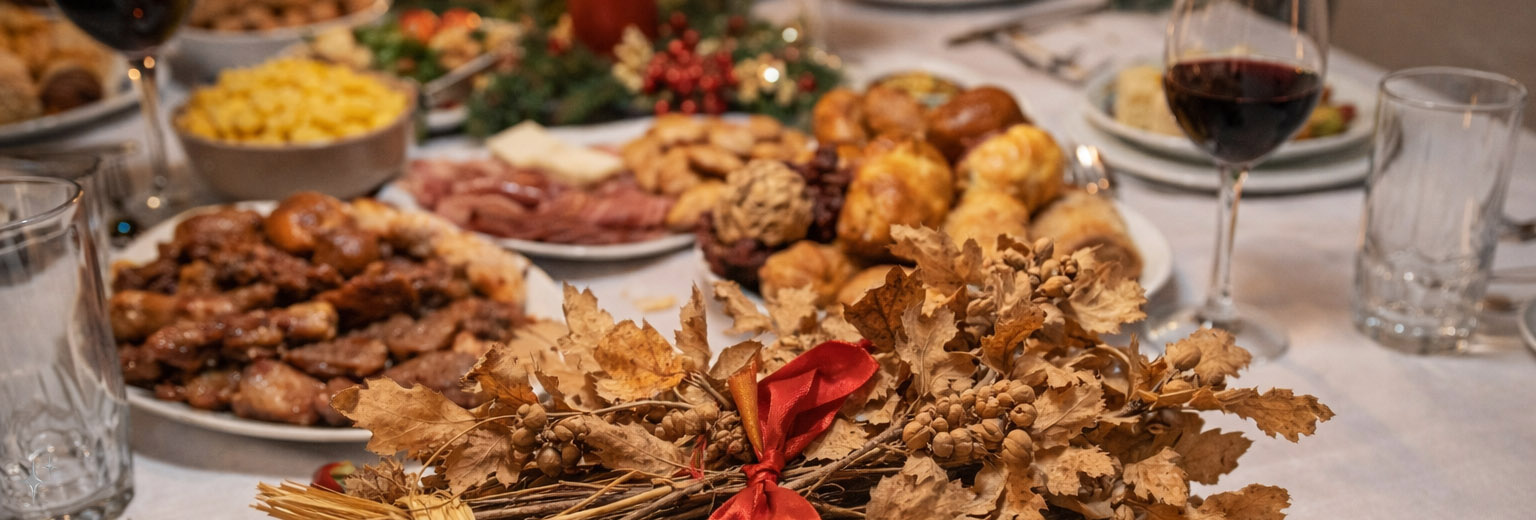
A Fire That Speaks Serbian
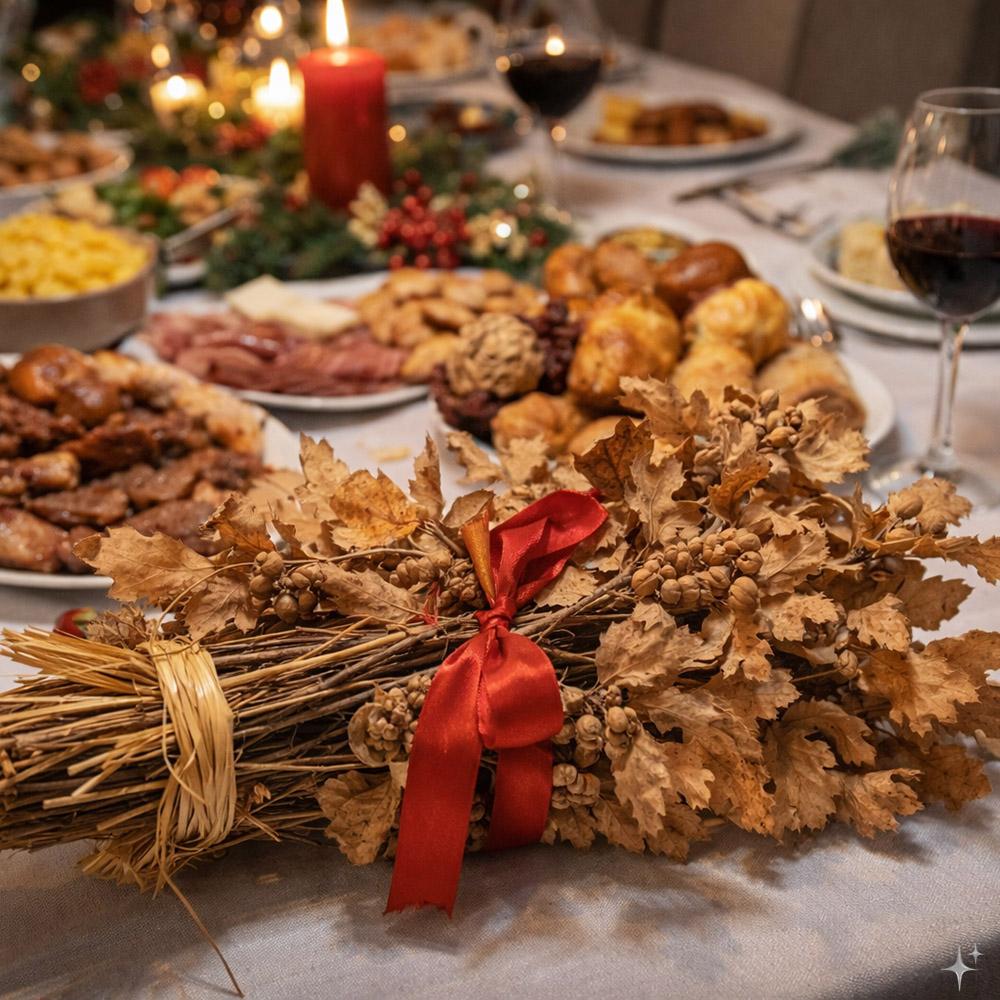
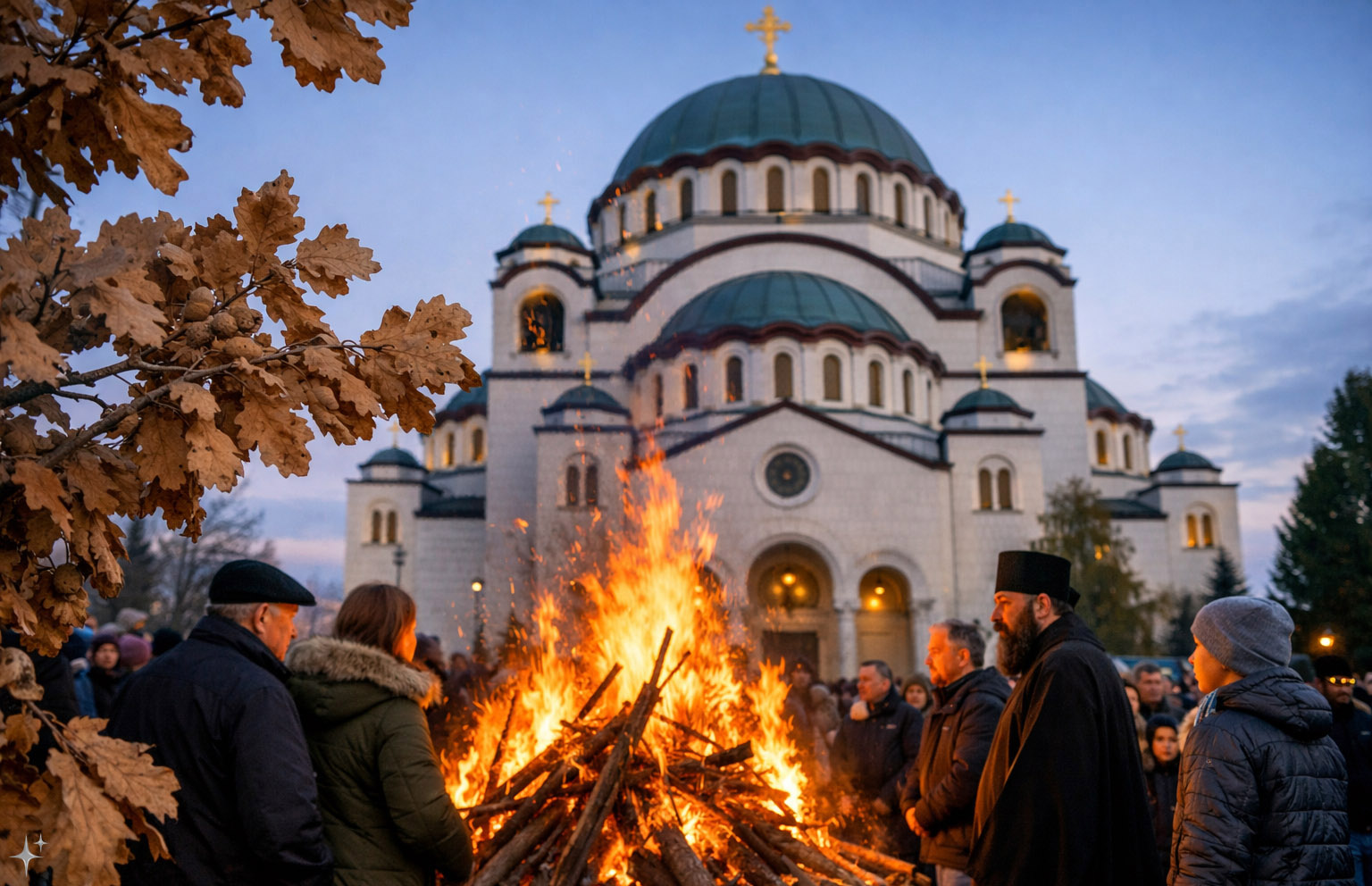
On the eve of great holidays, the world grows quiet in different ways—somewhere through the glitter of city lights, elsewhere through the calm and warmth of a fire that gathers people together. In Serbia, on Christmas Eve, that light has a name: the Badnjak. It is not merely a piece of wood burning—in front of a house, in a churchyard, at a village crossroads, or in a city where sparks fly toward the sky like hurried, glowing greetings—but a symbol of togetherness and family.
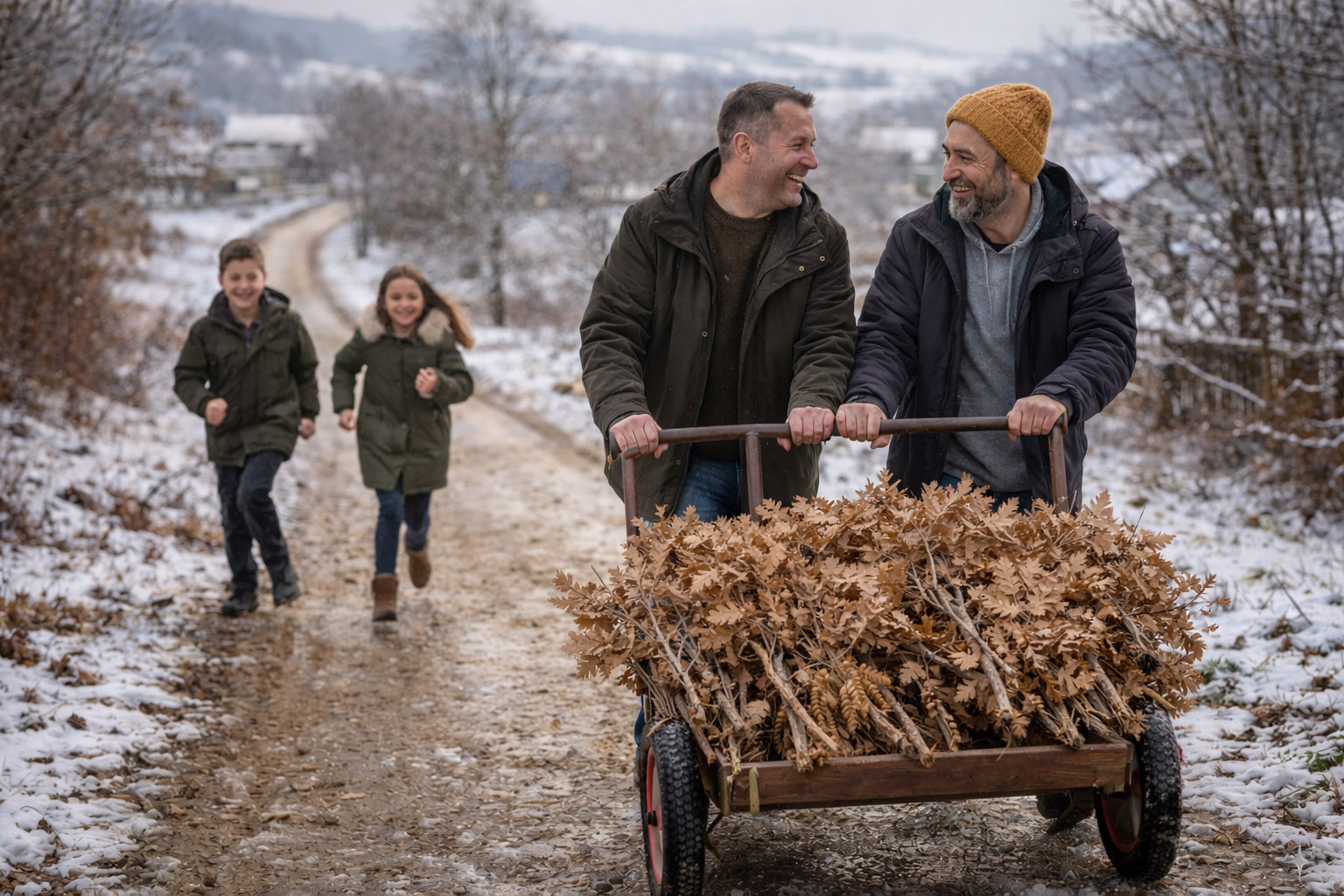
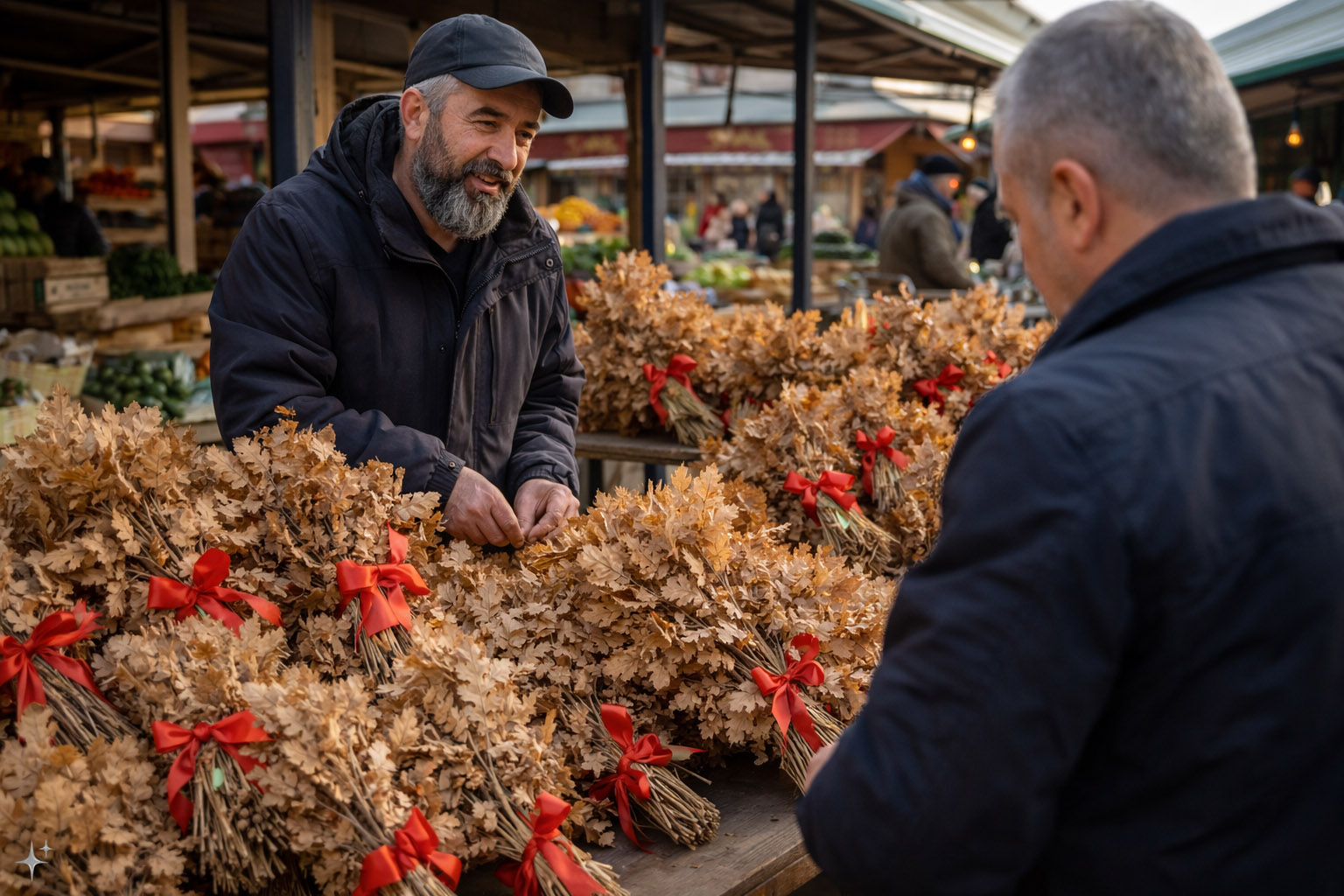
Lighting the Badnjak is one of the most striking customs of Serbian Christmas tradition. A young oak or Turkey oak is ritually cut on Christmas Eve day and brought into the home or lit that evening, accompanied by greetings and wishes for prosperity, health, and peace within the household. In modern life, when many no longer have a hearth, the Badnjak is increasingly lit collectively in front of churches—and it is precisely there that its most beautiful purpose reveals itself: to gather people so that all may breathe as one within the circle of shared warmth.
Before Christianity: Oak, Hearth, and the New Sun
To understand the Badnjak, one must step back to a time before church bells—when fire marked the boundary between winter and survival, and the oak was more than just a tree. Among the ancient Slavs (and across wider European pre-Christian traditions), fire in the darkest part of the year carried a clear message: “we will endure,” “the light will return,” “a new cycle begins.” This is why the Badnjak embodies a union of the tree cult and the fire cult—an ancient rite that symbolically invokes the strength of the sun and the fertility of the coming year, with the hearth at the center of family life.
In this layer of meaning, the oak appears as the “right” tree for such a ritual: strong, long-lived, revered. It is no coincidence that the Badnjak is most often associated with oak or Turkey oak, nor that wishes for a household’s prosperity are woven around it. Even today, when the Badnjak is brought in or lit, an ancient logic shines through: a person does not face winter alone—but in community, beside a fire that binds everyone into the same rhythm.
Christianity embraced what people already knew in their hearts and gave it a clear Christmas symbolism. In Orthodox interpretation, the Badnjak fire recalls the fire that, according to tradition, shepherds lit in Bethlehem to warm the newborn Christ; the sparks are an image of joy, and the warmth a symbol of salvation and closeness. In some explanations, the Badnjak also foreshadows the wood of the Cross—from the tree that warms to the tree that saves, all joined in one powerful symbolic line.
That is why Christmas Eve in our tradition is not an evening of noise, but one of wakefulness and reconciliation: a time to carry nothing “heavy” into the new year of the heart, to forgive, and to enter Christmas in peace. And so the invitation is simple: join the lighting of the Badnjak—within your family, in a village, in a city, in front of the nearest church. Stand close to the fire, but even closer to people. And if someone asks what is being celebrated, you can answer calmly: the return of light—both the one in the sky, and the one within us.
In Christianity: Bethlehem, Light, and Peace
*Translation powered by AI