


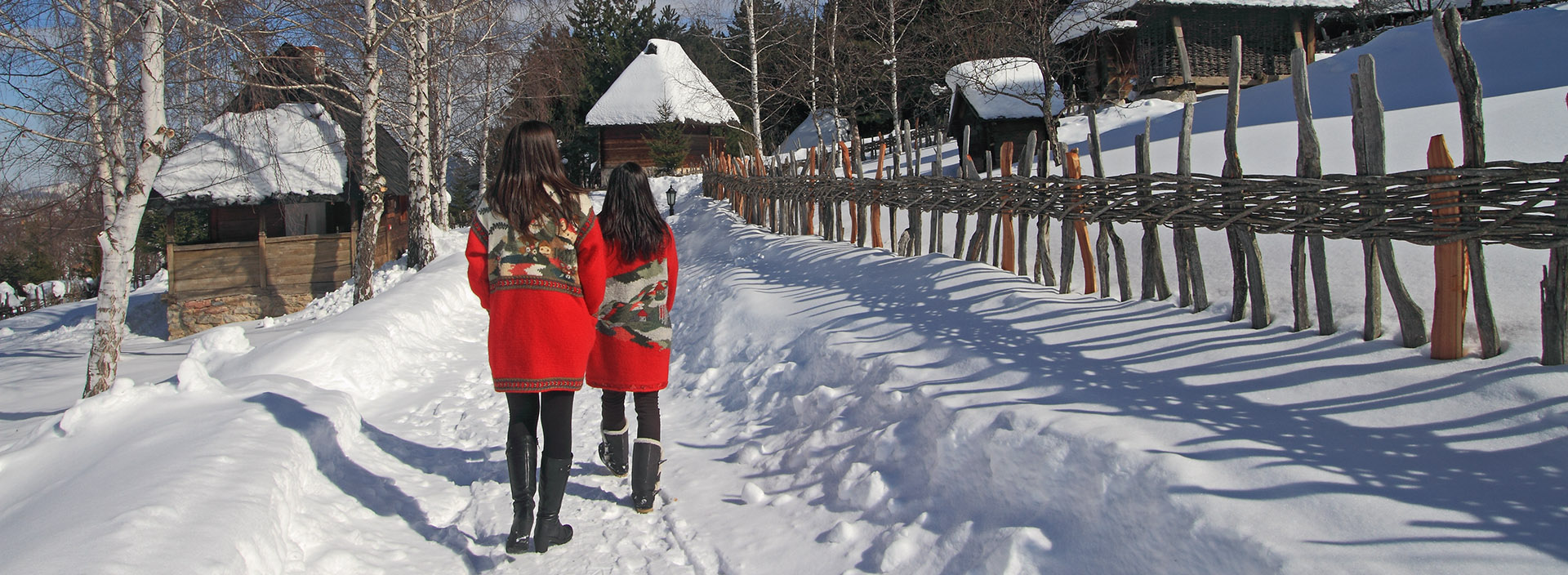
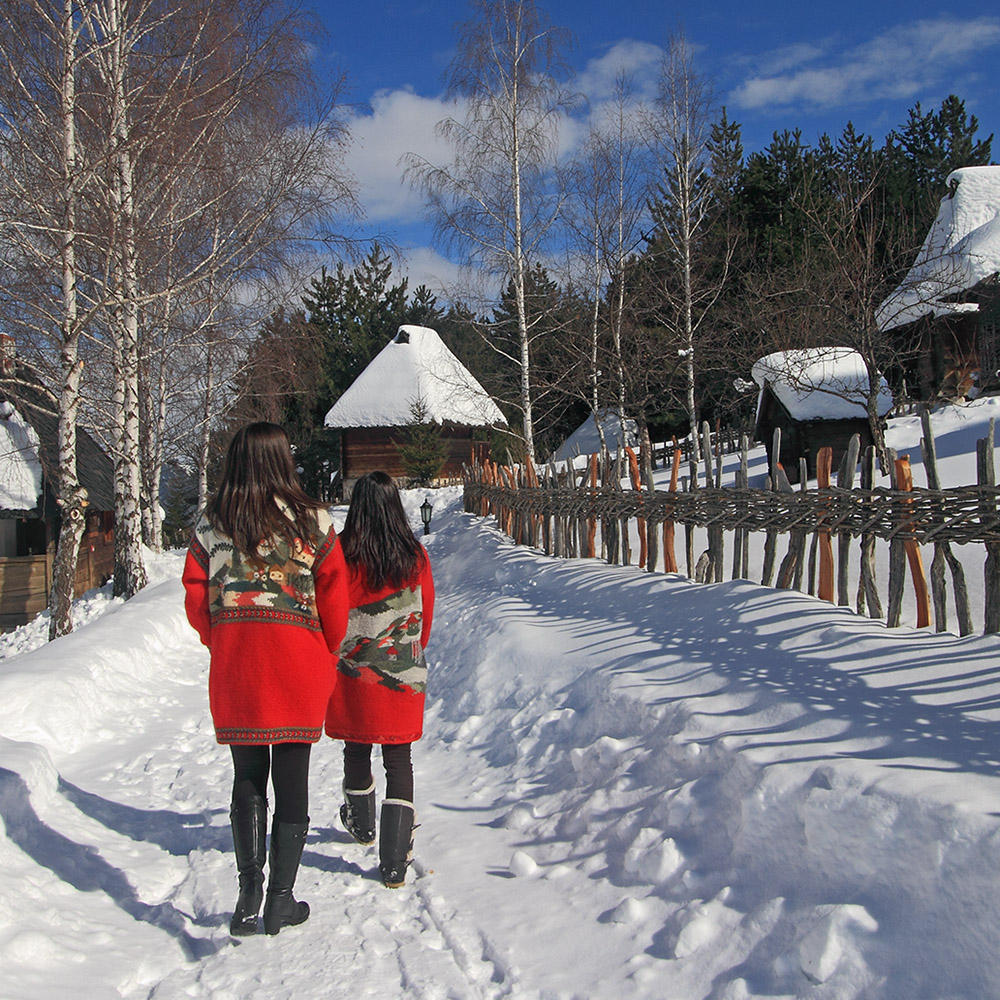
When the signal fades and taste finds its way
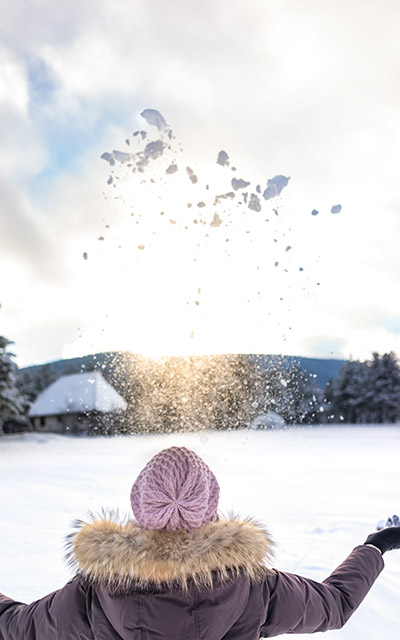
Early January has a quiet virtue: the world still speaks softly, and it becomes easier to hear yourself. It is the perfect moment for what we now call digital detox, and what our elders simply called “going out for some air.” On Zlatibor, that “air” is no metaphor—it smells of pine resin, wood-fired ovens, and snow that crunches like an old vinyl record beneath your feet.
Staying in a rural household here is not just accommodation; it is a gentle lesson in rhythm. Mornings begin with silence—the real kind, without notifications—and breakfast brings you back to life faster than any espresso: homemade bread, kajmak, cheese, and something warm “by the spoon” that simmered while you slept. Then, without haste, the day arranges itself: a walk, a conversation, and a bit of handcraft done slowly, with purpose. Zlatibor’s villages learned long ago that true luxury lies in simplicity—in wholesome food, clean water, and traditions that are lived, not displayed.
Gostilje – a village that speaks in water
Gostilje is one of those places where nature takes on the role of storyteller, and all you have to do is nod and let it lead the plot. The most famous “twist” here is the waterfall: before the Gostilje River meets the Katušnica, the water plunges down a limestone cliff some 20 meters high, creating a scene that feels almost drawn—meant to remind us how far we have drifted from simple wonders.
And it is not a single scene. Downstream, smaller cascades, rapids, and falls line up like pearls on a string, turning a walk into a series told in episodes.
Just about 25 kilometers from the center of Zlatibor, Gostilje fits easily into a family weekend or a brief escape from the city. What makes it special is not only the water, but the feeling of being in a village where nature is still the true host. You are a guest—offered the best seat, right beside the murmur. In the rural households around Gostilje, days unfold in the full meaning of “homemade”: homemade food, homemade conversations, a homemade pace of life. And most importantly, detox here is not planned—it simply happens.
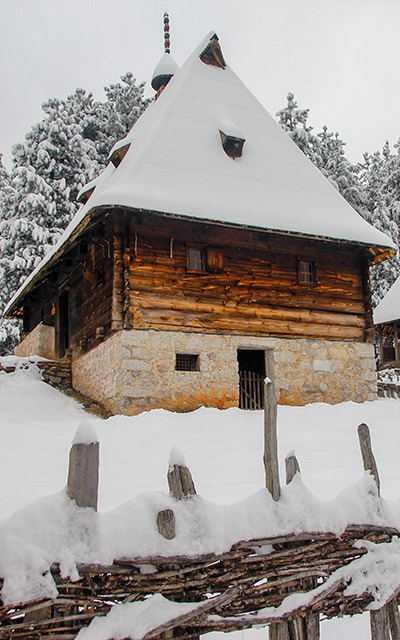
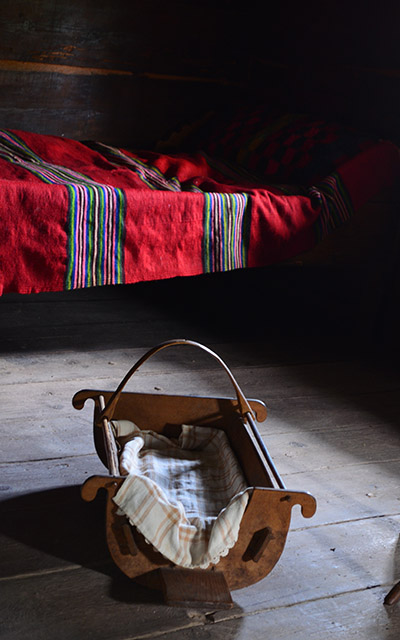
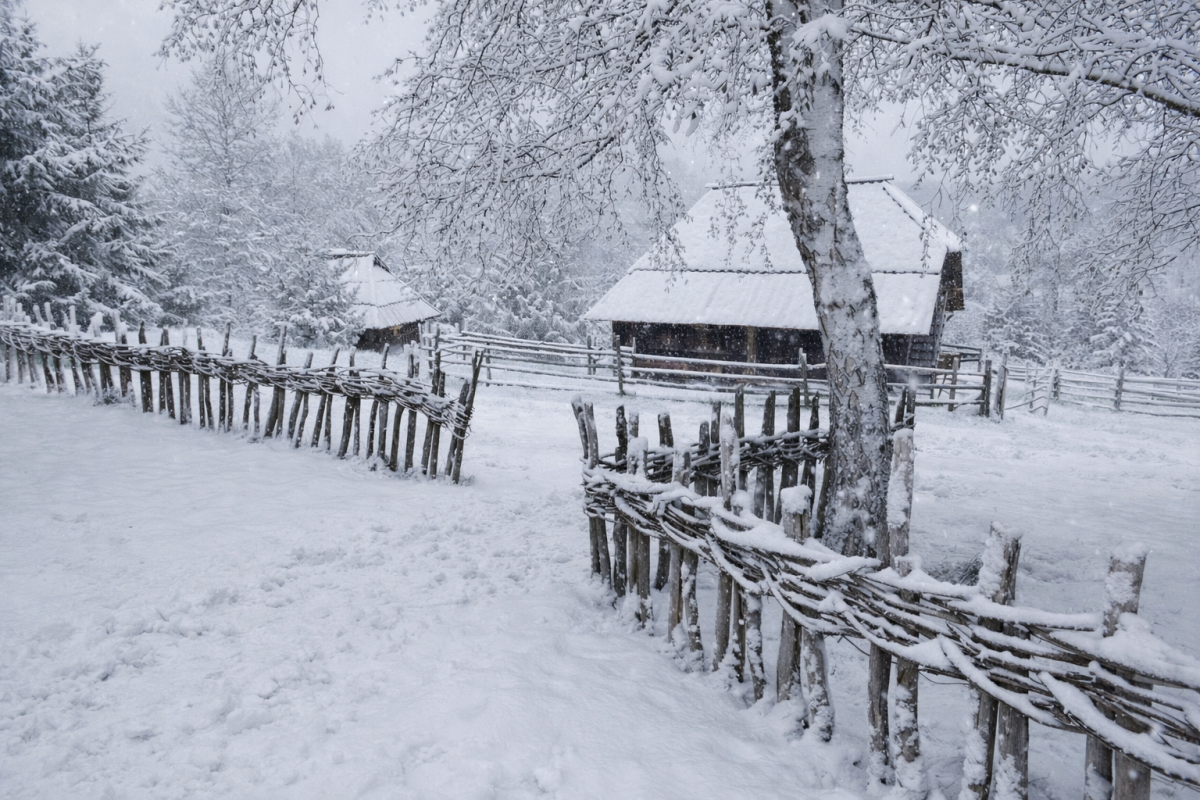
If Gostilje is Zlatibor’s watery signature, Sirogojno is its handwriting—written in wool, wood, and old houses that stand as witnesses to a wiser way of living. Sirogojno is home to the open-air museum “Staro selo” (Old Village): across roughly five hectares, some 50 buildings—log houses and auxiliary structures—have been brought from Zlatibor villages to preserve the architecture, interiors, and everyday life of the Dinaric mountain region.
Work on the museum began in 1979, and it stands next to the Church of Saints Peter and Paul—as if tradition deliberately chose to wait right by the doorstep, so you could not miss it.
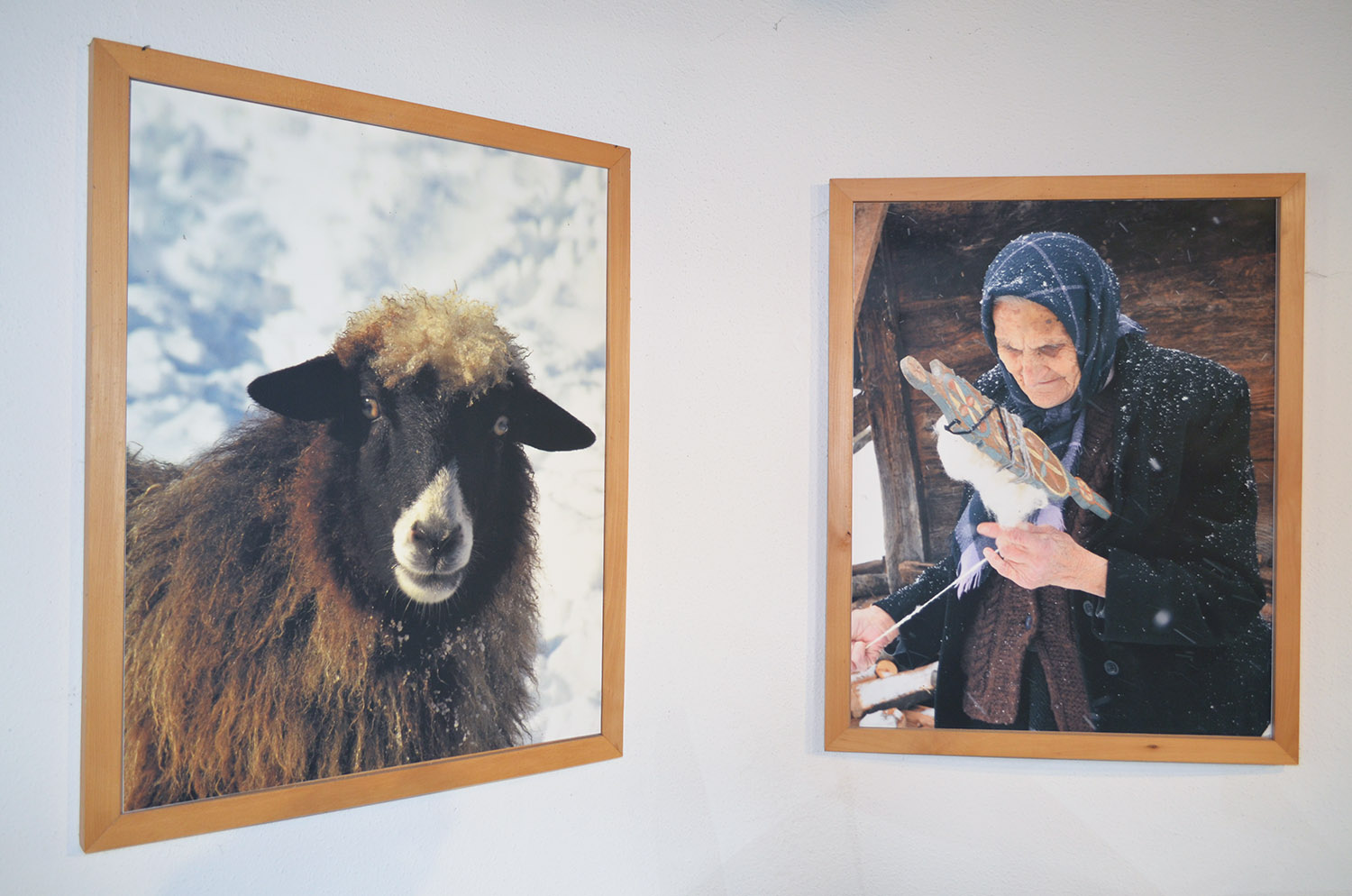
Sirogojno is also unique for something rarely seen today: a women’s craft that became a cultural hallmark of the entire region. The tradition of wool processing and knitwear has been nurtured for centuries, giving rise to the recognizable “Sirogojno Style”—a story of Zlatibor’s knitters and hands that know how to stitch warmth and beauty into every loop.
The museum still keeps these traditional crafts alive—spinning, weaving, knitting, embroidery—so a visit is not just a walk through the past, but an encounter with living knowledge.
Sirogojno – a village that weaves time
Bring comfortable shoes, an open appetite, and a switched-off phone. In Gostilje, you will learn how water tells stories; in Sirogojno, how time itself can be woven. And when you return to the city, you will realize you brought back the rarest souvenir of all—a kind of peace that does not fit in a bag, but fits perfectly within a person.
*Translation powered by AI