


When Onion Skins Fragrance the Air and the First Red Egg Shines
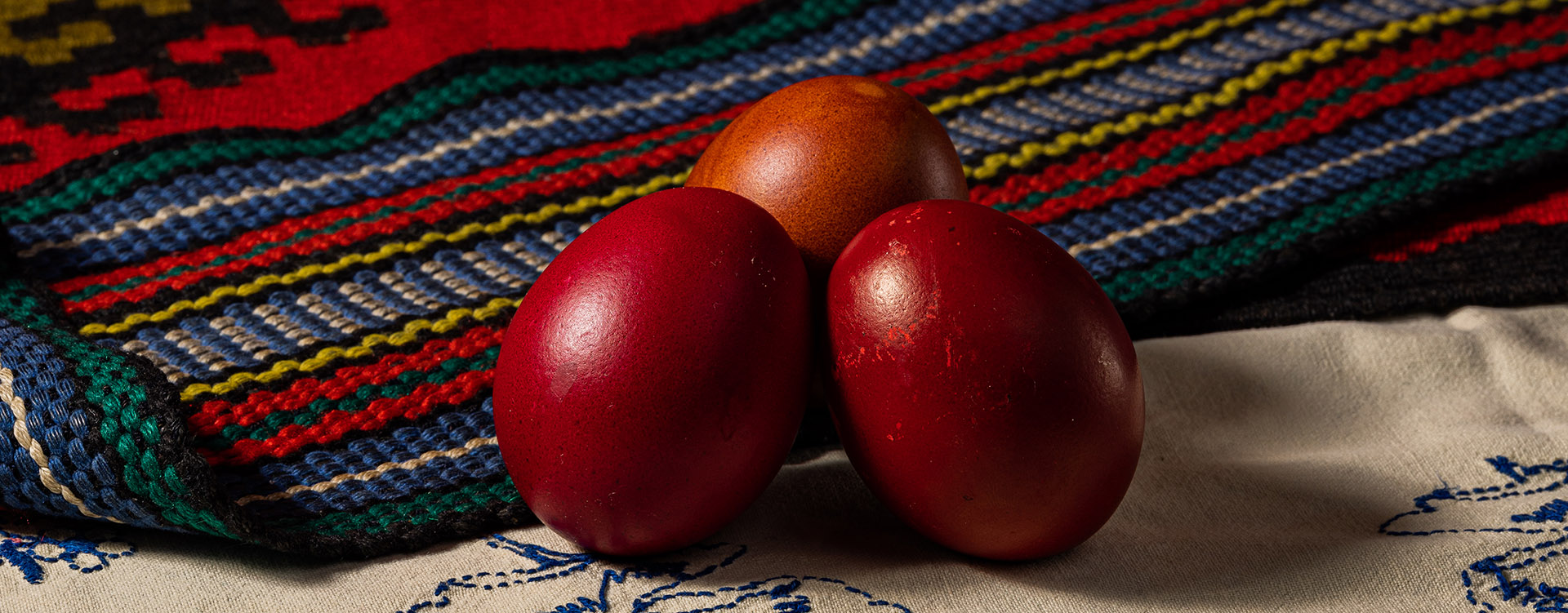
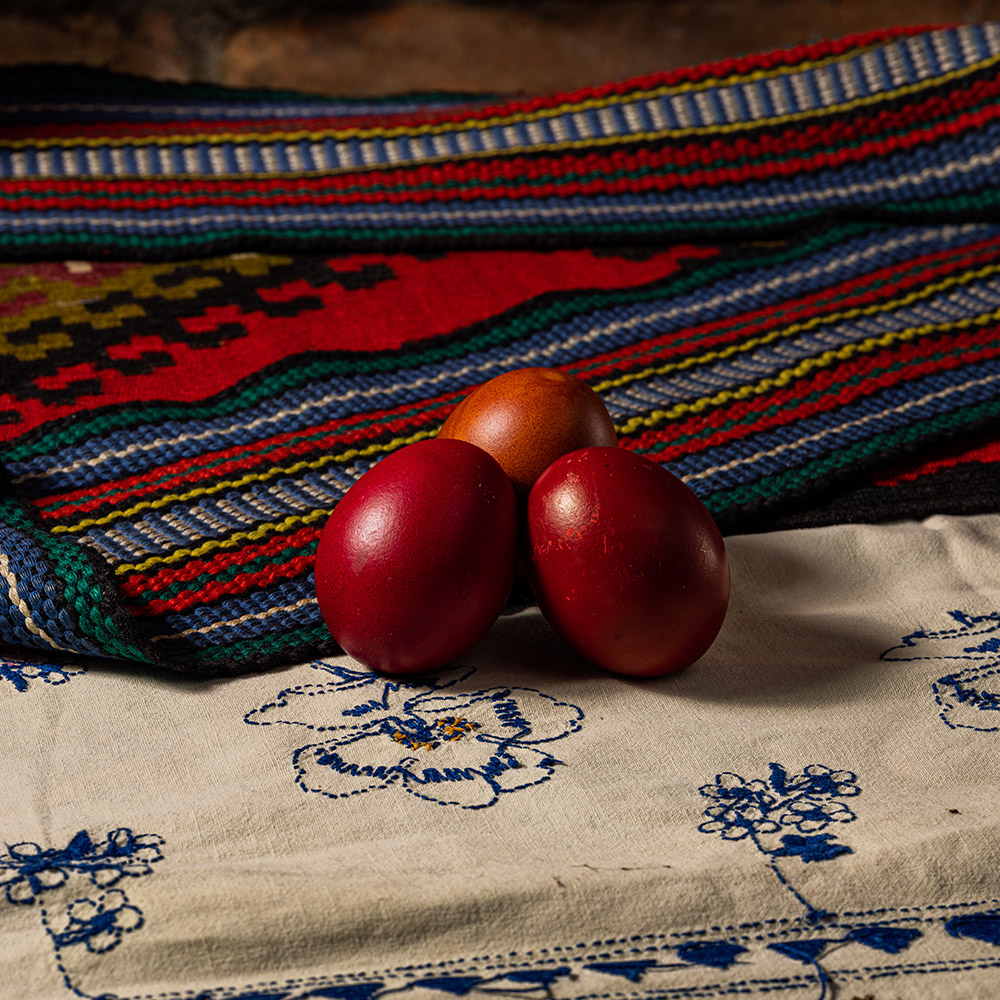
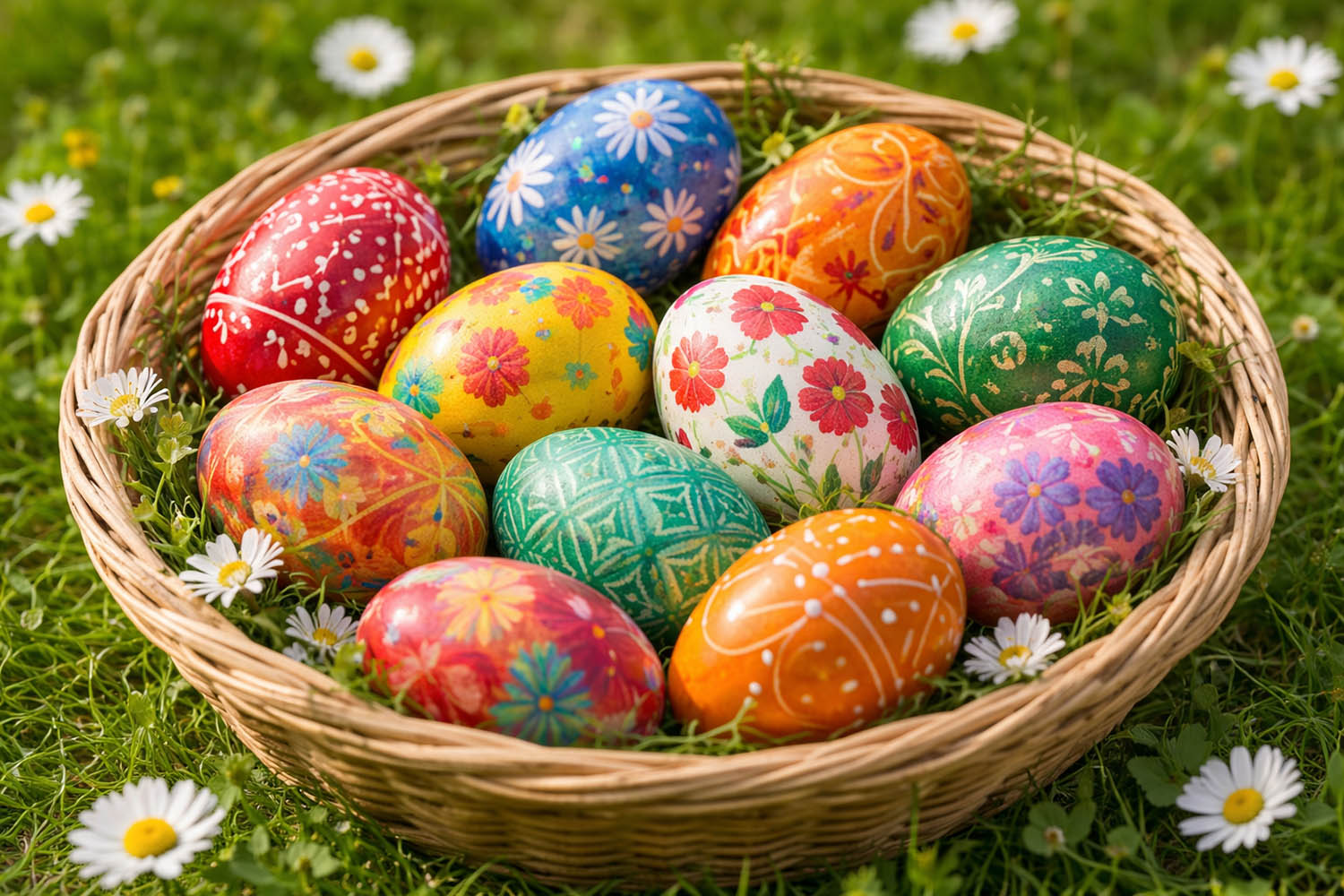
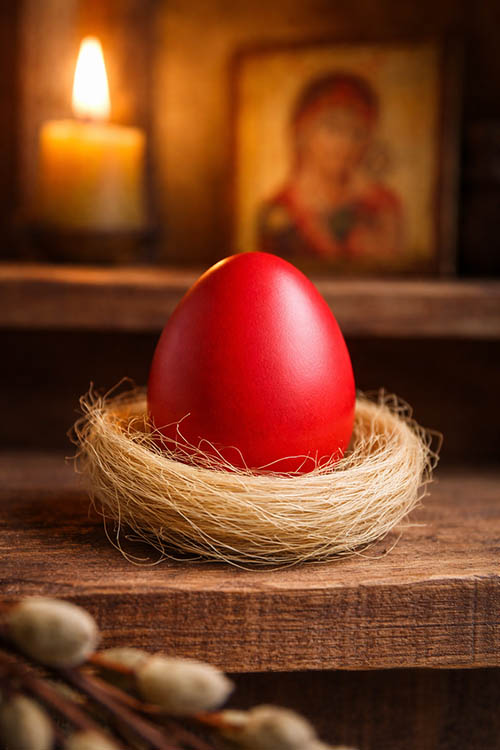
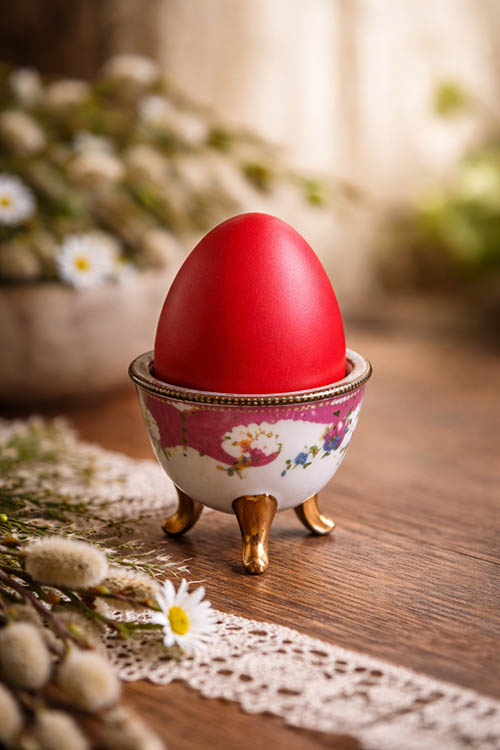
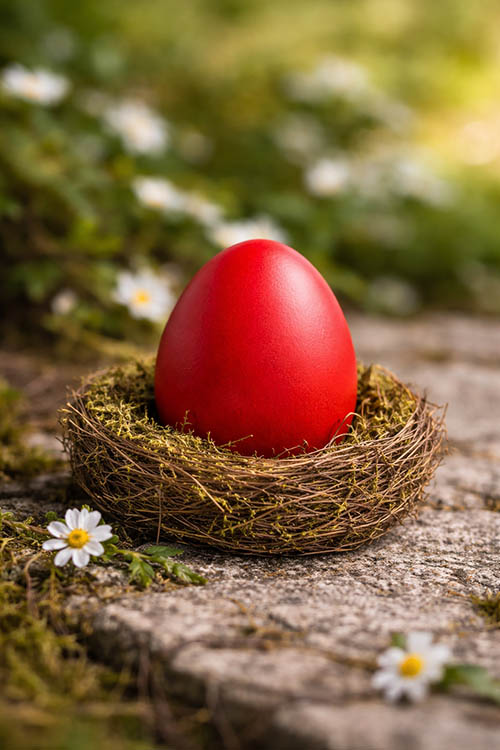
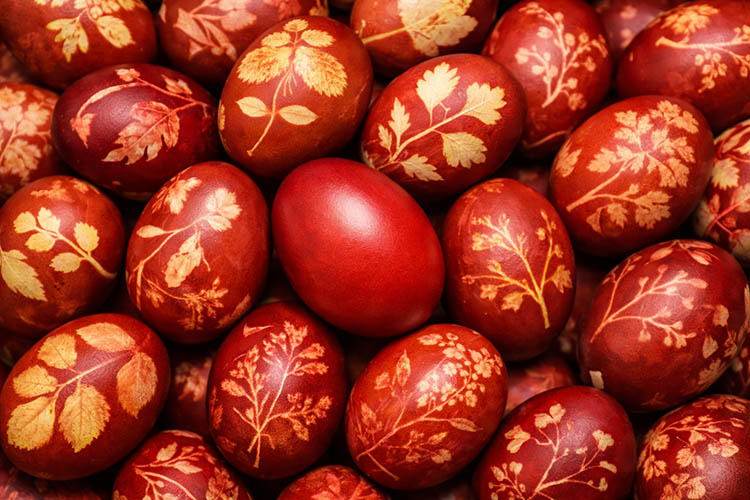
In Serbia, Easter is not announced only by the calendar, but by colors, scents, and a quiet family anticipation that slowly fills the home starting on Good Friday. On that day, in many households, eggs are dyed — most often the first one in red, the special one, the “guardian egg”, kept in the home as a symbol of health, prosperity, and blessing for the family. Some eggs are colored with onion skins, others decorated with wax and stylus, adorned with ancient letters, crosses, branches, and flowers, while in some homes each family keeps its own secret shade that no artificial color can replicate. And that is where the charm lies: Easter in Serbia is not just a holiday to celebrate, but one to prepare with your own hands. Around the table, in the kitchen, by the stove, with laughter, with stories from childhood, and with the inevitable remark that “eggs used to be more beautiful.” And yet, they are just as beautiful today, because each one carries something of home, something of tradition, and something of that quiet joy one can take only from a land where holidays are still felt with the whole being.
Visiting with an Egg and a Smile
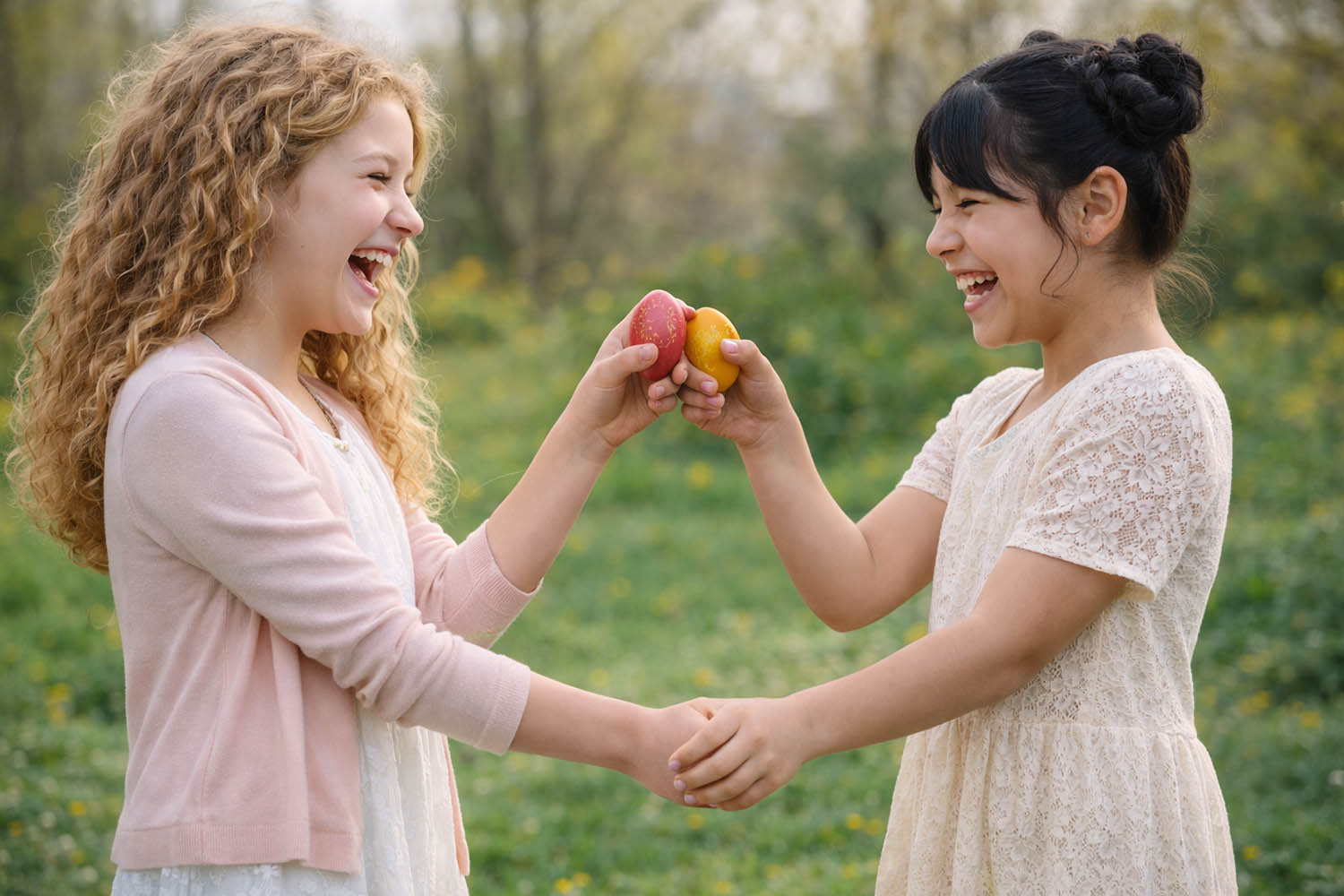
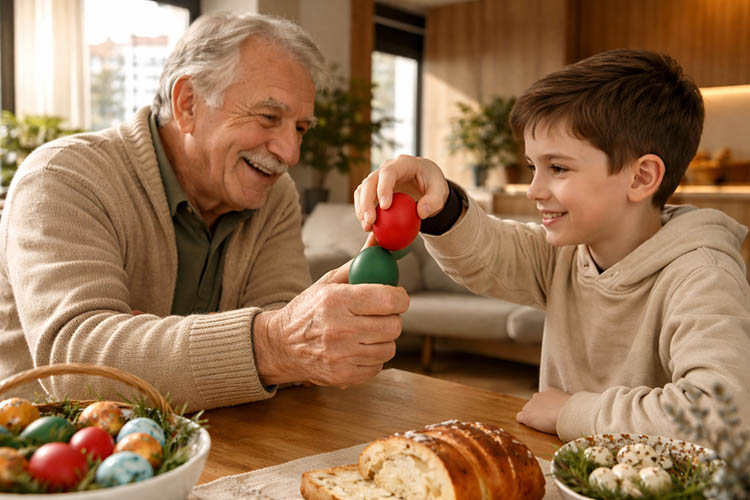
On Easter morning, Serbia becomes one large house with many doors open to friends, relatives, and neighbors. People visit carrying painted eggs, small tokens of attention — simple and beautiful, just as important things once were. As soon as one crosses the threshold, a greeting brings the holiday to life: “Christ is risen” followed by a warm, almost melodic reply: “Indeed, He is risen”. Then begins what children anticipate more than sweets, and what adults pretend not to care about — though they certainly do — egg tapping. The hardest eggs are chosen, examined like jewels, weighed in the hand, and even the smallest victory is celebrated as if something far greater than breakfast has been won. This custom carries both playfulness and meaning: Easter in Serbia is a celebration of connection. Joy is not meant to be kept alone; it must be shared — reaching another hand, another table, another child who will treasure their egg like a trophy until the evening.
The Table Where Both Holiday and Family Gather
And then, when guests have come and gone, when eggs have been chosen, cracked, and have brought laughter to the household, it is time for the family table — the real one, festive and Sunday-like — the kind that slows down the day and quiets the phones, if only for a while, which for modern life is almost a small miracle. On the table are Easter eggs, homemade bread, traditional loaf, a festive meal, desserts, and everything each Serbian home simply calls “ours,” without needing further explanation. At Easter, it is not only family that gathers, but also memory: of grandmothers who decorated eggs most beautifully, of grandfathers who always “accidentally” won the egg tapping, of childhoods scented with vanilla, incense, and spring. That is why Easter in Serbia is much more than a holiday — it is an experience of togetherness that a traveler does not merely observe, but feels the moment they sit at the table. And for those who wish to see how tradition transforms into a lively public celebration, Serbia also hosts special events dedicated to egg tapping, among which the most famous is the Mokrinska Tucanijada, a renowned competition that year after year proves that tradition here is not a memory, but a living, playful, and welcoming part of everyday life.
*Translation powered by AI